

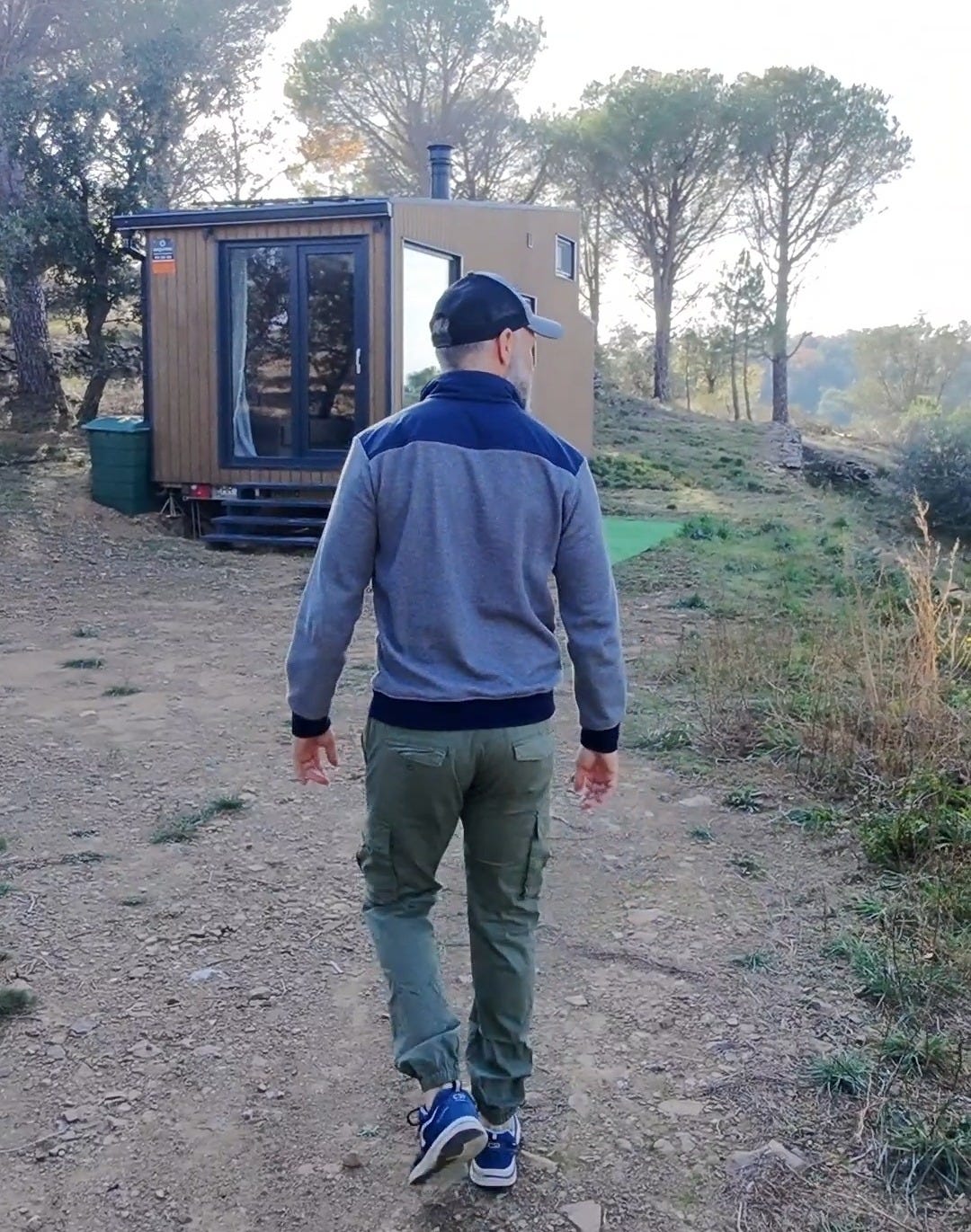
Living off-grid in a tiny house is often sold as a dream of freedom: open skies, fewer obligations, more time for what matters. But once the solar panels are dialed in, the water system runs smoothly, and the space works, a quieter challenge often emerges—loneliness.
Not the romantic solitude on a sunny deck with a coffee, but the deeper, disorienting sense of being cut off from others and from the social rhythms that used to structure life.
In this final part of the “7 Biggest Off-Grid Tiny House Challenges” series, let’s talk honestly about social isolation and connectivity. This isn’t just about having a good internet plan. It’s about understanding how the mind reacts to solitude, how to distinguish nourishing solitude from harmful isolation, and how to deliberately design your social ecosystem—just as intentionally as you designed your solar power system or water setup.
Solitude vs. Isolation: A Crucial Distinction
Psychologically, solitude and loneliness are not the same thing. Solitude is the chosen experience of being alone. Loneliness is the painful feeling that your need for meaningful connection is not being met. You can feel lonely in a crowded city apartment, and deeply connected while living miles from the nearest neighbor.
Off-grid tiny house life amplifies this distinction. If you embrace solitude intentionally, it can become a powerful space for reflection, creativity, and emotional reset. If you simply “end up” alone—because moving off-grid made you physically distant from friends, family, and coworkers—then isolation can quietly turn into sadness, anxiety, or a persistent feeling that you are living on the outside of life.
The first step is to be honest with yourself: is this solitude chosen and affirming, or is it a side-effect of other choices that you haven’t fully acknowledged?
What Happens to the Mind in Isolation
From a psychological point of view, humans are wired for connection. Our nervous system regulates itself through eye contact, voice, touch, and shared presence. When those become rare, a few things can happen:
Time starts to feel strange. Days can blur into each other, especially when your routines are self-created rather than externally imposed by work or social obligations.
Self-talk gets louder. With fewer external inputs, your inner narratives amplify. That can be healing or destructive, depending on the stories you habitually tell yourself.
Small problems can feel bigger. Without someone to “reality check” worries or frustrations, minor setbacks—a broken pump, a storm-damaged roof, a failed battery—can feel overwhelming.
From my own experience, I can definitely confirm these; especially the last one. It’s funny how I can get upset about tiny things which in the past I didn’t even notice—like the world ends if I spill a bit of coffee on the table… I always need to ground myself when this happens and then I laugh about myself.
None of this means off-grid life is “too hard”; it means you need to approach social and psychological hygiene as seriously as you approach maintenance and energy budgeting. You wouldn’t rely on a single small battery for your entire power system. You also shouldn’t rely on a single weak connection for your emotional well-being.
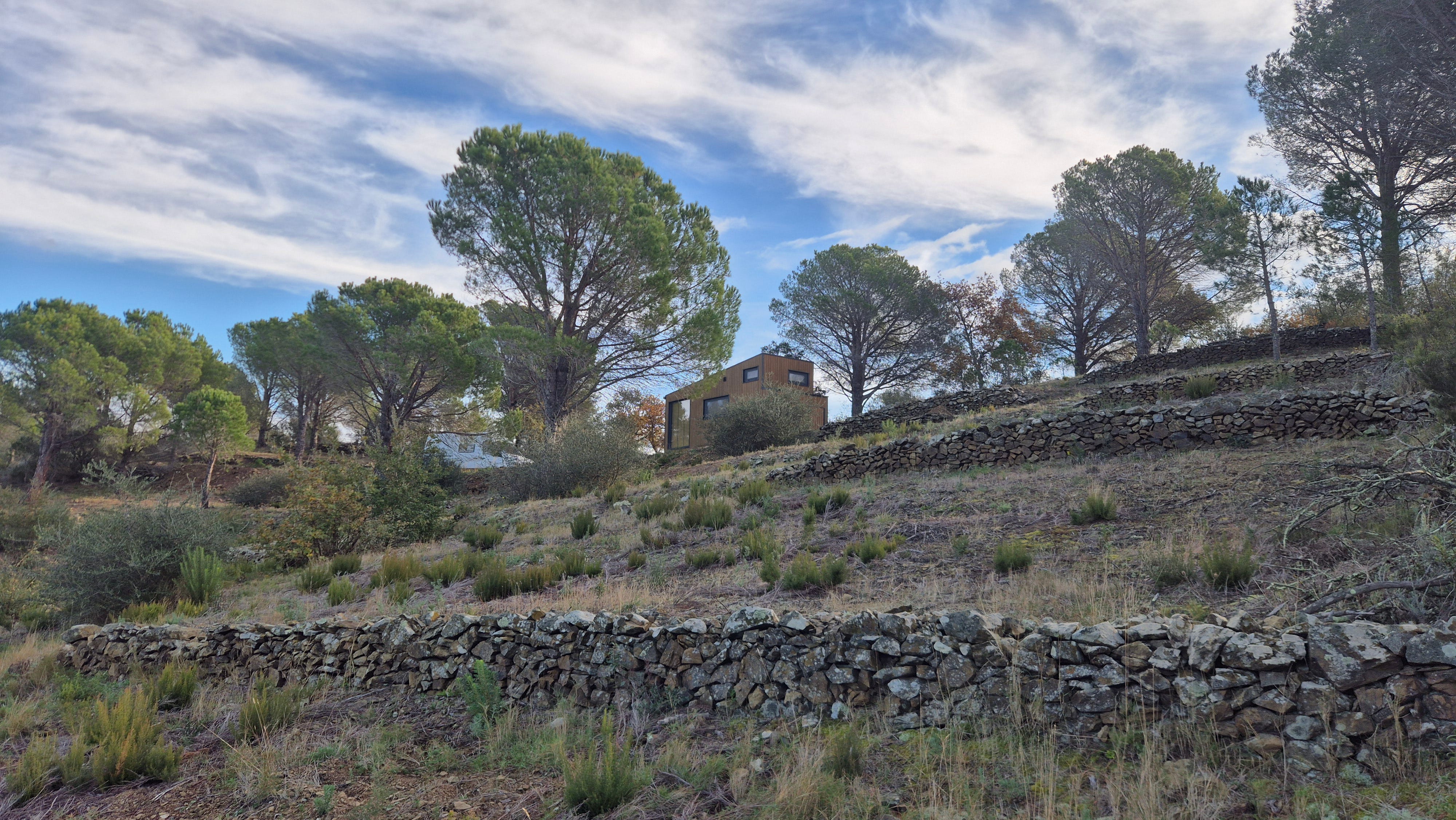
Thoreau’s Walden: Solitude as Practice, Not Escape
My recent article about Thoreau’s Walden offers a useful lens here. Thoreau didn’t go to Walden Pond to escape humanity forever. He went to experiment with a simpler, more deliberate life, then returned to society with insights—and as a better person. His solitude was a practice, not a permanent withdrawal.
There are three lessons from Walden that apply directly to off-grid loneliness:
Deliberate solitude. Thoreau chose his isolation and framed it around questions: What is essential? How much do I really need? Off-grid life becomes dangerous when solitude is accidental rather than deliberate. You can borrow his approach by asking: What am I using this solitude for?
Connection through nature. For Thoreau, nature was not a backdrop; it was a relationship. The pond, the seasons, the animals—these were part of his “community.” When you treat your land as something alive to be in dialogue with, the experience of being alone shifts from emptiness to intimacy.
Return to the world. Thoreau wrote, shared, debated, and engaged. He used solitude to clarify his values, then re-entered public conversation. Your off-grid tiny house can similarly be a base from which you contribute to the wider world, not a bunker you hide in.
When you frame your life as “living deliberately,” loneliness becomes a signal to adjust how you balance solitude and connection—not a verdict that you are in the wrong place.
Philosophical Reframe: Loneliness as Feedback
Philosophically, loneliness can be seen as feedback from your deeper self: a message that your current mix of autonomy and connection is out of alignment with your nature.
Off-grid living typically meets three powerful needs:
Autonomy: You decide how you live, what you own, how you spend your time.
Competence: You feel capable as you build systems, solve problems, and maintain your home.
Meaning: You feel aligned with your values—simplicity, sustainability, self-reliance.
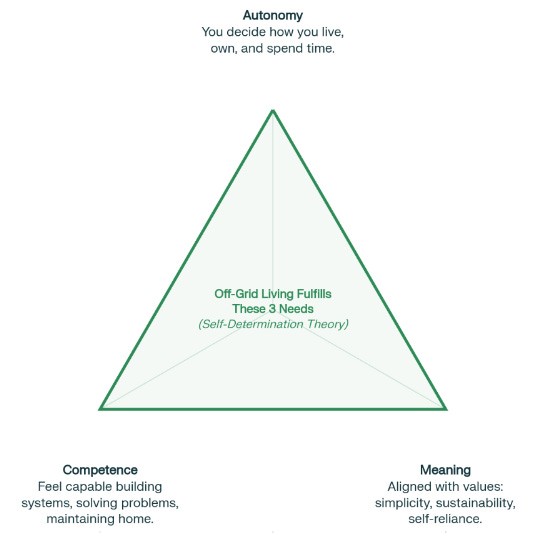
But humans also need relatedness—the sense of belonging to others. If you over-optimize for autonomy and competence while starving relatedness, the result is often a low-level ache that is easy to misinterpret: “Maybe I’m just not tough enough,” or “Something is wrong with this lifestyle.” In reality, nothing is wrong with you or the lifestyle. The “system” is just unbalanced.
Seen this way, loneliness is not a sign that you failed at off-grid life. It is simply data: “More contact needed.” The deliberate move then is not to abandon the cabin, but to redesign your relational infrastructure.
Designing Your Social Infrastructure
Just as you designed your power system with redundancy, capacity, and realistic use in mind, you can design your social ecosystem with the same intentionality. Think in layers:
1. Inner circle (close ties)
These are the people you can contact when things go wrong or when something beautiful happens. For off-grid living, schedule is everything:
Weekly or bi-weekly calls or video chats that are in the calendar, not “whenever.”
A few people who understand your lifestyle enough to give relevant support.
2. Local connections (geographic community)
Remote doesn’t have to mean socially empty. Look for:
Neighbors you can share practical help with: tools, rides, information, eggs… ;) — My neighbor has free-range, happy chickens and sometimes I get fresh eggs, which I love.
Local markets, cafés, or community gatherings you can visit regularly.
Even simple small talk with the same faces builds a sense of belonging over time.
3. Interest-based communities (values and passions)
These might be online or occasional in-person:
Tiny house, off-grid, or van life groups where people “get” your challenges.
Communities around your passions—fitness, writing, sustainability, philosophy.
These connections remind you that your life is part of a larger movement, not an isolated experiment. For me this a Crossfit box in the next town about 20km away, which I attend 2-4 times a week.
When you map these layers out on paper, you quickly see where your network is robust and where it is thin. That clarity alone reduces the sense that loneliness is some mysterious, unfixable feeling. First step to solving a problem is always awareness.
Connectivity as a Tool, Not a Trap
Digital connectivity can be a lifeline in remote settings. A decent internet connection:
Keeps you in touch with friends and family.
Provides access to knowledge when you’re troubleshooting systems.
Allows you to work remotely, share your journey, and generate income.
For me this is absolutely key.
But there is a subtle trap: escaping loneliness by flooding yourself with random content. Scrolling fills time but doesn’t necessarily fill the need for meaningful connection. The key is to have a purpose, goals and to use technology intentionally:
Prioritize interactive communication over passive consumption.
Set up recurring calls, masterminds, or co-working sessions rather than endless feeds.
Use online spaces to create, share, and contribute—not just to consume.
I really love creating. And since I have been living in the tiny house my productivity increased. My recent publications (see The Rich Minimalist, Solar Serenity book etc.) and projects reflect this quite clearly. I am using my “space” and tech to share useful stuff, build a community around rich minimalism and off-grid living, and find ways to monetize my activities in a win-win way. I need money to buy my coffee too… That act of contribution is, in itself, an antidote to isolation.
Practical Habits to Protect Your Mental Health
A few concrete practices can keep loneliness from turning into something heavier:
Daily structure. Anchor your day with simple rituals: morning movement (I usually walk my land, check my infrastructure and collect firewood), mid-day outdoor time (workout, visit my neighbor etc.), evening productivity time (write, create, program etc.). Structure stabilizes mood.
Body first. Regular exercise, exposure to daylight, and decent sleep (I became really good a siesta!) are potent protectors against anxiety and depression. A tiny house lifestyle often makes these easier—if you choose them deliberately.
Voice and face time. Try to have at least one real-time voice or video interaction with someone you care about every few days, especially in darker seasons.
Creative output. Building (can be soft- or hardware), creating, writing, woodworking, gardening, or content creation turn solitude into something productive and meaningful. Others recommend journaling—even though I never got the hang of it. Doesn’t deliver value to me but that’s individual, I guess.
Check-ins with yourself. Once a week, ask: “Am I energized by this solitude, or drained by it?” If the answer leans toward drained several weeks in a row, treat that like a red warning light on your power dashboard—time to adjust.
When to Take Loneliness Seriously
There is a difference between occasional loneliness and a deeper slide into depression or anxiety. Off-grid life can mask these shifts because the days are busy and physically demanding.
Pay attention if you notice:
Persistent low mood or hopelessness.
Loss of interest in things you usually enjoy.
Changes in appetite, sleep, or energy that last more than a couple of weeks.
Thoughts like “It wouldn’t matter if I disappeared.” That’s a tough one, I know. but a very important indicator that you need to take seriously.
If these appear, the bravest, most self-reliant move is to reach out—for family and friends, for a change in your routine or setting, for community, or even for professional help. Choosing off-grid living does not mean you must do everything alone.
Living Deliberately, Together
Thoreau showed that it is possible to step away from the noise of society to discover what is essential. But he also showed that the goal is not to vanish into the woods forever. It is to live more deliberately—whether in a cabin, a van, or a tiny house on wheels.
Feeling lonely in your tiny off-grid home does not mean you chose wrong. It means you are being invited to apply the same intentionality to relationships and mental health that you already apply to your tiny living hardware and infrastructure (your energy, water, and space). Your home may be small and remote, but your life does not have to be.
In the end, the richest minimalist life is not just about owning less or being more self-sufficient. It is about crafting a way of living where freedom, connection, meaning, and joy can coexist—even at the end of a dirt road, under a big sky, with a small house and a wide-open heart.
Subscribe to The Rich Minimalist for more minimalist inspiration, practical off-grid guides, and freedom-focused living:
Please share your experiences on solitude and loneliness and in the comments.
Or just leave a ❤️