

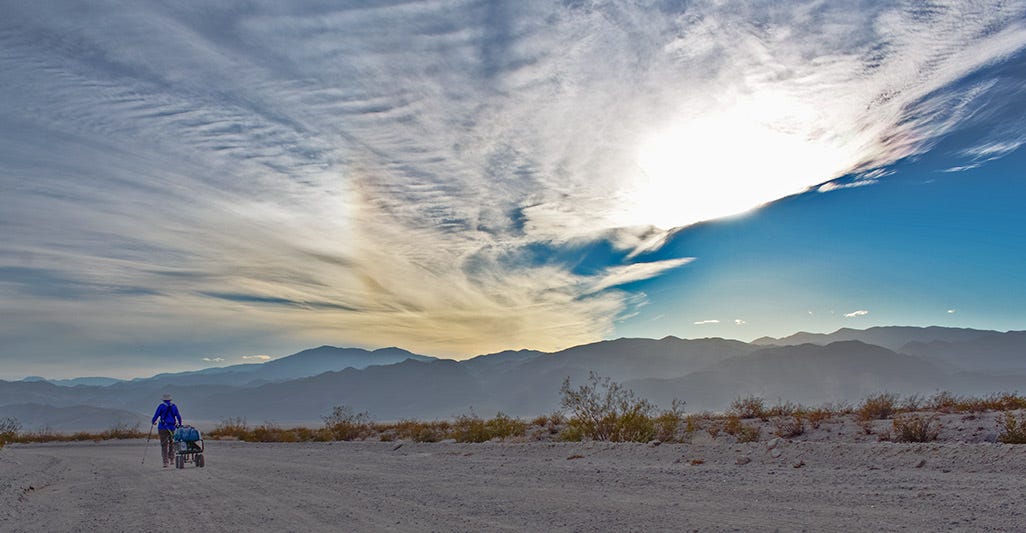
Helen Thayer is one of those rare people whose life reads like an adventure novel. But behind the record-setting expeditions is a mindset that anyone can learn from. Her story is not just about surviving extreme environments. It is about setting audacious goals, planning meticulously, and refusing to let age, fear, or other people’s expectations define what is possible.
Who Is Helen Thayer?
Helen Thayer was born in 1938 in Whangārei, New Zealand, to parents who were passionate amateur mountaineers, and she climbed her first mountain (Mount Taranaki, Egmont) at just nine years old. That early exposure to the outdoors planted a lifelong love of exploration and resilience, long before anyone had heard of “adventure athletes” or “extreme explorers.”
She later studied laboratory medicine in Auckland and graduated in 1961, then moved through Guatemala and Honduras before settling in the United States in 1965, blending a professional life with an increasingly ambitious outdoor one. Before becoming famous as a polar and desert explorer, she was an elite athlete: a world‑class discus thrower and the U.S. National Champion in 1975, representing New Zealand, Guatemala, and the United States in international competition.
Key Achievements and Expeditions
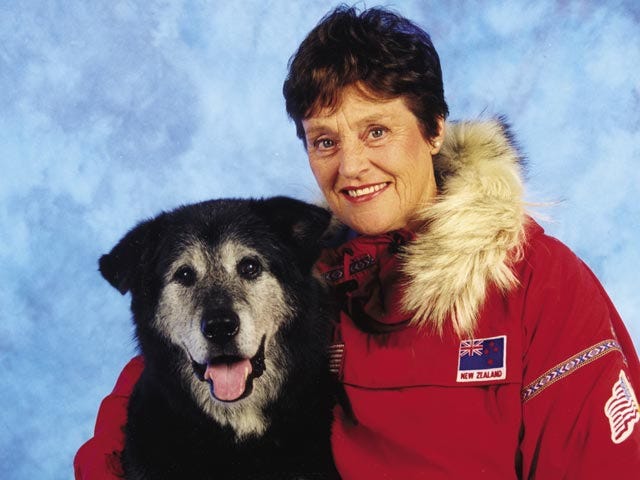
Thayer’s name is most often associated with her groundbreaking journey to the magnetic North Pole. At age 50, in 1988, she became the first woman and the oldest person at that time, to complete a solo, unsupported expedition to the magnetic North Pole, pulling a 75kg sled and traveling 585 km on foot. She traveled without resupply, dog teams, or snowmobiles, accompanied only by her Inuit dog Charlie, facing drifting ice, polar bears, storms, and the psychological weight of true isolation.
For everyone who has done a bit of alpinism will know how tough that is and what an incredible achievement that is.
And that journey was only one chapter. Together with her husband Bill, she became part of the first couple to travel unsupported to the magnetic North Pole, and she later led the first Soviet‑American Women’s Arctic Expedition to Siberia in 1990. She walked more than 6,400 km across the Sahara from Morocco to the Nile, becoming the first woman to cross the Sahara Desert on foot, and trekked around 2,575 km across Mongolia’s Gobi Desert. She also became the first non‑indigenous woman to kayak more than 3,500 km along the Amazon River, and spent more than six months living above the Arctic Circle near a wolf den, documenting the daily life of a wolf family.
Adventure Classroom and a Life of Teaching
In 1988, Helen and Bill Thayer founded Adventure Classroom, a nonprofit educational program designed to bring their expeditions into schools and inspire students around the world. Using photos, stories, and curriculum materials, Adventure Classroom translates extreme journeys into lessons about geography, ecology, culture, goal setting, and perseverance for young people who may never leave their own country. I would have loved to get those topics taught in school.
Thayer has said explicitly that her objective is to motivate students to
“raise the bar in setting goals, planning for success, practicing persistence and believing in themselves.”
She often tells her students that “we all have our metaphorical North Poles.” She emphasizes that any big goal is reached the same way she reached the magnetic North Pole: one step at a time, with careful planning and a refusal to quit.
Lesson 1: A Goal Without a Plan Is Only a Dream
One of Thayer’s most powerful messages is simple: “A goal without a plan is only a dream.” None of her achievements happened because she was “fearless” or “lucky”; they happened because she broke huge objectives, like crossing deserts, skiing to the Pole, living with wolves—into detailed, practical preparation.

For anyone trying to redesign life (moving off‑grid, starting a new business, changing careers) this is highly applicable. Inspiration is cheap; logistics are everything.
Helen models a mindset where vision and day‑by‑day planning are inseparable: you decide where your “North Pole” is, then you map the route, assemble the skills and resources, and accept that discomfort and setbacks are part of the process, not signs you should stop.
Lesson 2: Perseverance Over Fear and Obstacles
Helen’s expeditions are full of moments where quitting would have been understandable: shifting ice threatening to crack under her feet, storms in the high Arctic, provisions blown away by wind only a week before her pickup point. Yet she persisted without calling for rescue, trusting her preparation and her capacity to endure short‑term suffering in service of a long‑term commitment.
She often tells audiences that perseverance means overcoming problems, obstacles, and the fear of failure “one step at a time,” and that quitting is not an option when you have truly committed to a goal. That does not mean recklessness; it means consciously deciding beforehand that difficulty, boredom, and fear are not signals to stop, but expected companions on any meaningful path—whether that path is across the ice or through a multi‑year project.

Lesson 3: Age Is Not a Barrier
Helen Thayer reached the magnetic North Pole solo at 50, walked major deserts and kayaked the Amazon in later years, and was still walking hundreds of miles a year in remote areas well into her seventies. She explicitly rejects the idea that age (young or old) should be treated as a hard limit on what you are allowed to attempt.
Her message is that as long as you set clear goals, plan carefully, and maintain your health and skills, age becomes a parameter to account for, not a wall that stops you. For readers who feel “too late” to change their life, pursue an adventure, or reinvent their work, Thayer’s example is a sharp counterargument: meaningful endeavors are compatible with middle age and beyond, if you are willing to prepare and to accept gradual progress.
Lesson 4: Purpose Beyond the Self
Helen repeatedly emphasizes that her work is not just about personal records. It is about what those adventures can do for others, especially young people. She frames exploration as a vehicle to foster intercultural respect, environmental awareness, and a belief in personal agency among students who will “inherit this world.”
That orientation toward service matters. Pursuing hard goals purely for ego tends to burn out; tying them to a purpose beyond the self makes them more sustainable and more meaningful. Whether you are designing a tiny off‑grid home, building a business, or training for your own physical challenge, linking your effort to the benefit of others—family, community, future readers—adds a layer of motivation that persists when the initial excitement fades.
Lesson 5: Redefining What Strength Looks Like
Helen is also outspoken about the capabilities of women and the importance of ignoring those who underestimate you. She tells girls and women to “take pride in being a woman and believe you can achieve the impossible,” insisting that women are not fragile, and that stamina and inner strength can be developed through training, planning, and self-belief.
Her life reframes strength as a blend of physical endurance, mental resilience, and emotional purpose. It is not about domination or bravado, but about sustained commitment in the face of doubt: both your own and others’. In an age of quick wins and instant gratification, Helen’s quiet, decades‑long body of work is a reminder that deep strength is cumulative, built through thousands of small, consistent actions aligned with a clear vision.
Walking to the Edge of the World
Helen Thayer’s life shows what becomes possible when curiosity, courage, and discipline are applied over many years. You may never ski to the magnetic North Pole or cross the Sahara, but her principles scale down perfectly to everyday life:
Choose a “North Pole” that matters to you, plan it in detail, move toward it one step at a time, ignore the naysayers, and look for ways your journey can uplift others along the way.
Thank you for reading. If you found this story inspiring, subscribe to The Rich Minimalist for more true tales, lessons, and minimalist living insights that nourish body, mind, and spirit.
If you like extreme stories like this, you may also like my previous posts:
Surviving Six Days on a Ledge Alone
How Ernest Hemingway Survived Two Plane Crashes in Two Days: Grit, Humor and Lessons for Life
Or just leave a comment or a ❤️