

If you’ve ever lived in a tiny house, you know the truth: tiny spaces heat up and cool down fast.
One minute you’re cozy in the morning sun, the next you’re fanning yourself like it’s a heatwave. And in winter? That same space can turn into an icebox by nightfall.
Heating and cooling is one of the seven biggest challenges of off-grid living—and for good reason. Without access to city utilities, you can’t just flip a switch on a furnace or AC unit. You need smart, energy-efficient solutions that work with your off-grid lifestyle, not against it.
So how do you stay warm in winter and cool in summer—without draining your batteries or losing your mind?
Let’s break it down.
Why Tiny Houses Are So Sensitive to Temperature
Tiny homes are small—often under 37 square meters. That means less air to heat or cool, which sounds great… until you realize that heat transfers faster in small spaces.
With less thermal mass, your home quickly absorbs heat from the sun during the day and loses it fast at night. Add in thin walls, large windows, or poor insulation, and you’ve got a recipe for discomfort. (That is why I strongly recommend to have good windows and strong insulation, see below.)
The good news? With the right design and habits, you can stay comfortable all year—using minimal energy and maximum common sense.
Step 1: Insulation Is Your Best Friend
You can’t talk about heating and cooling without talking about insulation. It’s the foundation of temperature control.
Think of insulation like a cozy blanket for your home. It keeps heat in during winter and out during summer.
For off-grid tiny houses, aim for high R-value insulation in walls, roof, and floor. Popular options include:
Spray foam – excellent seal, high R-value, but pricier.
Fiberglass batts – affordable and easy to install, but needs careful sealing.
Rigid foam boards – great for tight spaces and moisture resistance.
Natural options – like wool or recycled denim, for eco-conscious builds.
Don’t forget the roof—it’s where most heat escapes. And seal every gap! Air leaks around windows, doors, and electrical outlets can undo even the best insulation.
I opted for Rockwool which is a brand name for a type of insulation made from melted volcanic rock and recycled slag spun into fibers, known generically as stone wool. This material has excellent thermal, acoustic, and fire-resistant properties.
Step 2: Passive Heating & Cooling—Work With Nature
The smartest (and cheapest) way to manage temperature? Use the sun and airflow.
Passive Solar Heating
South-facing windows (in the Northern Hemisphere) let in winter sun, warming your space naturally.
Use thermal mass—like concrete floors, stone walls, or even large jugs of water—to absorb heat during the day and release it at night.
Close curtains at night to trap heat; open them during the day to let it in.
Natural Cooling
Cross ventilation is key. Open windows on opposite sides to create a breeze.
Use shading—awnings, overhangs, or even trees—to block summer sun.
Ventilation fans (solar-powered!) help pull hot air out and draw cool air in.
These passive strategies cost little or nothing—and they work all the time.
Step 3: Off-Grid Heating Solutions
When the sun goes down and the temperature drops, you’ll need a backup heat source. Here are the most popular off-grid options:
1. Propane Heaters
Propane heaters are clean-burning, efficient, and widely used in tiny homes. There are various options to address your requirements like wall-mounted or freestanding models. I recommend using a vented model for safety and better air quality.

2. Wood Stoves
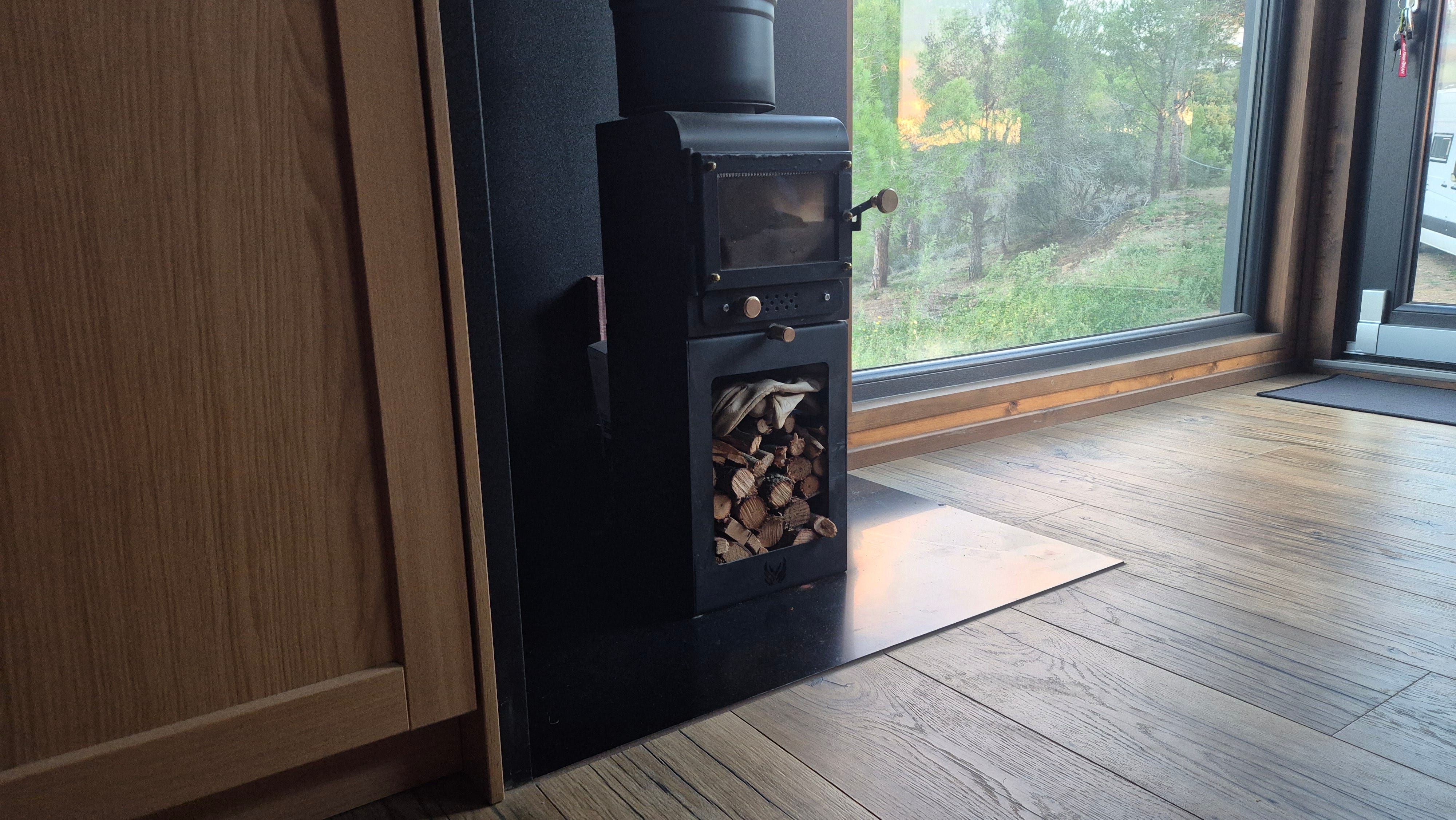
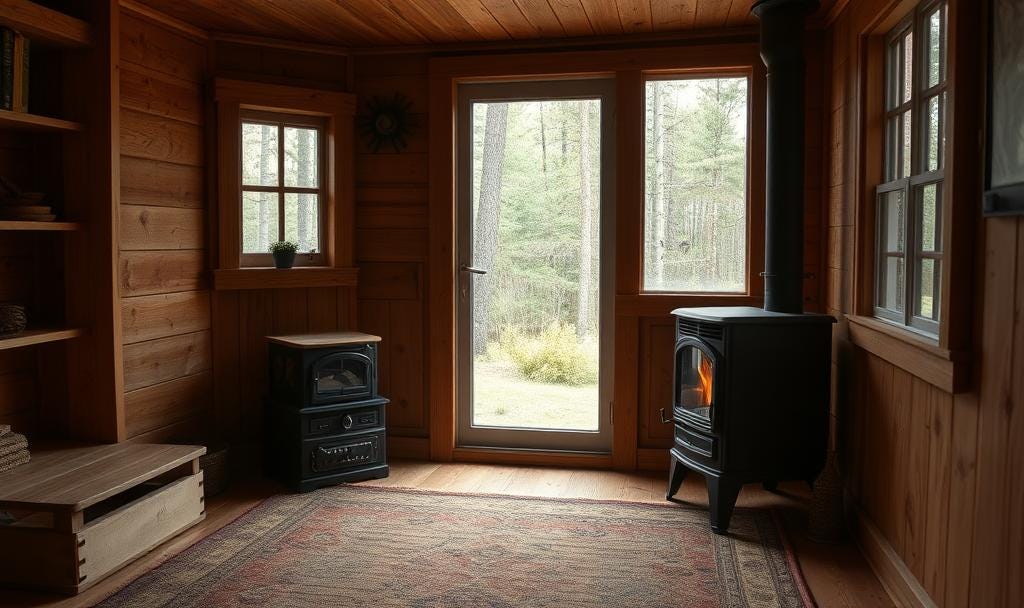
These are kinda my favorites. They are cozy, reliable, and great for off-grid cabins, and in my view most in line with nature-oriented lifestyle. I do have one too and I have a lot of wood on my land, which means I don’t have any extra cost operating my stove.
Bear in mind, you need o install a chimney and that also needs safe clearance from walls. As a bonus, you can cook on top of some models (or dry your socks conveniently).
3. Electric Heaters (Use Sparingly!)
Electric heaters are an option, too, even thought I really do not recommend them. They require a lot of energy, and are only viable if you have a large solar plus battery system. Ideally you have factored those in during your energy audit.
Make sure you use oil-filled radiators. They are safer and more efficient than fan heaters. Avoid running them all day. They are really only intended for emergencies.
4. Mini-Split Heat Pumps (Advanced Option)
A mini-split heat pump provides both heating and cooling by moving heat between an outdoor unit and one or more indoor air-handling units. These systems are efficient because they don’t use ducts, which allows for zoned temperature control and makes them a great option for homes without existing ductwork or for specific areas like room additions.
They are, however, expensive (somewhere between $2000 and $10,000) and also run on electricity, so needs a robust solar setup.
Step 4: Off-Grid Cooling Solutions
Staying cool off-grid is trickier—especially since air conditioners are energy hogs.
But there are ways to beat the heat without melting your solar budget.
1. Swamp Coolers (Evaporative Coolers)
Swamp coolers, also known as evaporative coolers, use water and a fan to lower air temperature and are an excellent solution for tiny houses in dry climates. Because the evaporation process is so energy-efficient, they consume far less electricity than traditional air conditioners. However, these units are not effective in humid areas, as high humidity greatly reduces their cooling performance.
2. DC-Powered Fans
DC-powered fans can run directly from solar batteries, making them an efficient cooling option for off-grid homes. Installing ceiling, box, or personal fans helps circulate air and maintain comfort, while solar attic fans can pull hot air out of the roof space, further lowering the interior temperature.
3. Portable AC Units (With Caution)
Portable air conditioning units should only be considered if a tiny house is equipped with a large enough solar array and battery storage system to handle their high energy demand. It is best to select inverter-driven portable AC models, as they are more efficient than standard options. To maximize efficiency, portable AC units should be used sparingly—just to quickly bring down the indoor temperature, rather than running continuously.
4. Shade, Shade, Shade
Leveraging or creating shade significantly reduces heat buildup in tiny homes. Parking a house under trees, installing reflective window films or exterior shades, or setting up a portable awning can offer instant relief from the sun. Combining natural shade with energy-efficient cooling devices will yield the best comfort and system performance for off-grid solar-powered living.
However, this may be in contrast with solar panels installed on the roof. In that case, you cannot have your house in the shade. Like with so many things with tiny living it’s all about compromises and making the decision that are right for your context.
Step 5: Smart Habits That Make a Big Difference
No system works perfectly without good habits. Here’s how to stay comfortable with less:
Layer up in winter – wear warm clothes, use blankets, and heat only the space you’re in.
Cook outside in summer – avoid adding heat to your tiny home.
Ventilate at night – open windows when it’s cooler.
Use thermal curtains – block heat in summer, trap it in winter.
Monitor indoor temps – use a simple thermometer or smart sensor.
Shower cold - will help you cool down in Summer, has health benefits, and saves energy and money.
Rugs and carpets - avoid stepping on cold floor. Or just wear flippers.
Final Thoughts: Comfort Is a System, Not a Single Fix
Heating and cooling your off-grid tiny house isn’t about one magic device. It’s about layering smart design, passive strategies, and efficient tech.
Start with great insulation, use passive solar and airflow, add efficient heating and cooling tools, and build good habits.
Do that, and you’ll stay cozy in winter, cool in summer—and never have to choose between comfort and your off-grid values.
Next up in the series: We’ll tackle Space Crunch and Storage—because even in a tiny home, you still need room for your life.
If you found this helpful, click the button below to subscribe to The Rich Minimalist for more real talk on off-grid living, minimalist design, and simple, sustainable solutions:
And if you’ve got your own heating or cooling hacks—drop them in the comments. Let’s learn from each other!
P.S. Want a printable checklist for off-grid heating and cooling? Let me know in the comments below—I’ll create one for the community!
Or just leave a ❤️