

The other day I stumbled upon the video “The Loss of Soul in the Modern World” by accident — or maybe it was the algorithm — and I really liked it. It’s though-provoking and very much in line with the drivers of The Rich Minimalist path. In this post, I want to expand on these.
The Modern Lie Thoreau Saw Coming
The video covers the essentials of Thoreau’s view on what it means to really live.
We’ve been sold a story: faster tech, endless connections, and more stuff equals progress and happiness. But this hyper-connected rush often leaves us emptier.
Henry David Thoreau spotted this trap in the 1840s amid America’s industrial boom. People chased bigger houses, longer workdays, and shiny comforts, only to end up in what he called “quiet desperation.”
Sounds familiar?
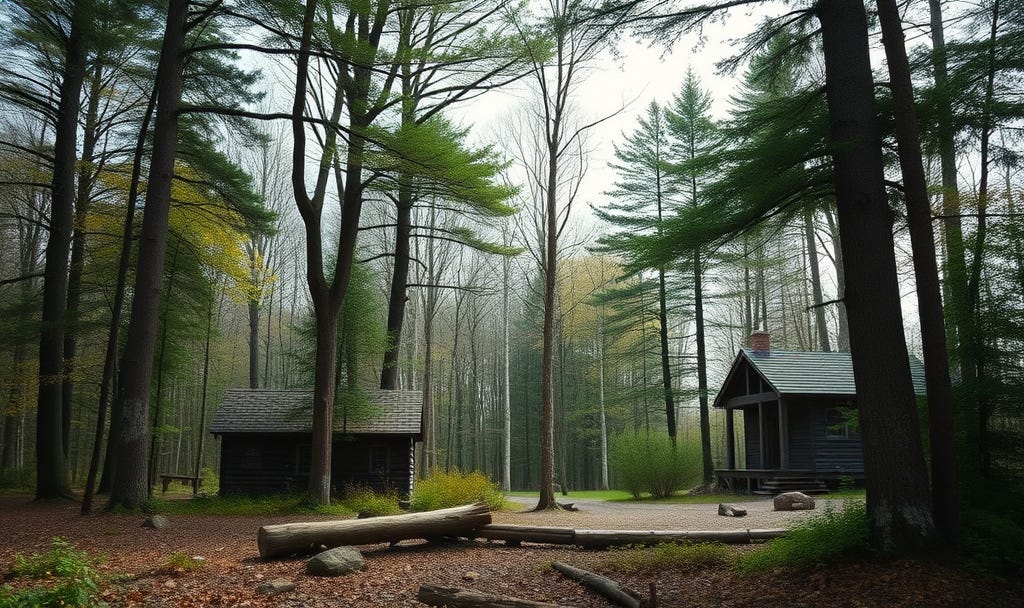
Thoreau decided to make a radical experiment. At 27, he built a simple cabin by Walden Pond for $28 (about a month’s Boston rent) and lived there over two years. He grew beans, walked miles daily, read ancient texts like the Bhagavad Gita, and watched seasons unfold.
His goal?
“To live deliberately, to front only the essential facts of life, and not, when I came to die, discover that I had not lived.”
This wasn’t a search for escape—it was the search for clarity.
Today, Thoreau’s warning hits harder. We know more facts than ever, yet drown in noise. Social media promises belonging but fuels division.
Our wants? Often manufactured, like bacon becoming “breakfast tradition” via 1920s PR wizard Edward Bernays (a nephew of Sigmund Freud), or Nestlé turning coffee into Japan’s comfort flavor through kid-targeted sweets. These stories show how ads shape “needs,” trapping us in cycles of work-buy-consume-repeat.
How Walden Stripped Life to Essentials
Thoreau’s days at Walden were simple: chop wood, tend crops, observe pond ice melt, reflect. He rejected excess—not for misery, but freedom. He wrote:
“A man is rich in proportion to the number of things which he can afford to let alone”
Fewer possessions meant more time for walks, writing, and nature’s lessons. Wealth wasn’t accumulation; it was space for what mattered.
He still visited town, welcomed guests, and fixed pencils for cash. Walden wasn’t isolation but intention. Nature taught rhythms—seasons turning, beans sprouting slowly—that clashed with society’s urgency. Influenced by the Gita’s call to detachment, Thoreau bathed his intellect in “stupendous philosophy,” finding spiritual depth in simplicity.
This deliberate living counters autopilot existence.
Thoreau questioned: Why another pair of shoes for approval? In our modern world, I’d add: Does doom-scrolling mornings or binge watching Netflix serve you? In our 6+ hours daily on screens, we trade presence for distraction.
Connecting Thoreau to The Rich Minimalist Ethos
Thoreau understood something most of us sense but rarely name: modern life often feels like a beautifully packaged trap. Society and corporations teach us what to want, then quietly relabel those wants as “needs,” until work, debt, and endless consumption begin to look like the only possible way to live. In his time already, he saw people trading their days for things that never truly satisfied them and becoming prisoners of their own comforts (“quiet desperation”).
Similar to Thoreau, The Rich Minimalist idea pushes in the opposite direction. Instead of asking “How can I afford more things?”, it asks “What remains when I strip life to its essentials?” Thoreau went to the woods not to run away, but to see more clearly what was necessary: food, shelter, honest work, and time to think. He still visited friends, walked into town, and welcomed guests. His experiment was about intention. That is the same spirit behind intentional minimalism, slow living, and off‑grid or low‑impact lifestyles today.
For Thoreau, simplicity was a form of freedom. The fewer possessions, obligations, and manufactured desires you carry, the more space you have for what truly matters—relationships, integrity, creativity, and contact with nature. True wealth, in this view, is not measured by what you own, but by how much of your life you can genuinely call your own. The Rich Minimalist takes this seriously: a rich life is not one stuffed with objects, but one aligned with deeply chosen values, meaningful work, and rhythms closer to those of the natural world.
Nature was one of Thoreau’s greatest teachers. The turning of the seasons, the stillness of the pond, the slow growth of his bean field—all reminded him that life has its own pace, often out of step with human urgency and the pressure to always move faster. This is beautiful and I intend to come to this closer, too.
Today, whether you live in a tiny house, an apartment, or a cabin in the woods, reconnecting with those slower rhythms can be an antidote to the constant motion and distraction that pass for “normal” life.
Living deliberately, for Thoreau, meant asking hard questions: Why am I doing this? Do I really need this? Does this bring me closer to the life I want, or just deeper into someone else’s script?
The Rich Minimalist takes those questions and applies them to modern traps: Do I really need to pick up my phone first thing in the morning and scroll myself into anxiety? Does it make sense to go into debt for something that will only make me happy for a moment? What am I actually trading my time and energy for?
Thoreau’s call to simplify is not nostalgia for a lost age; it’s a blueprint for taking back control. Whether it shows up as minimalism, digital detox, slow living, or some form of off‑grid or semi‑off‑grid life, the core idea is the same: reduce the non‑essential so you can live more honestly, more awake, and more freely.

Practical Steps: Your Walden Today
Translating Thoreau’s experiment into a modern life doesn’t require moving to the woods, but it does ask for courage and honesty.
The first step is to pause long enough to notice whether you are living by default rather than by choice. That might mean turning down the volume on constant input—news, social media, advertising—and giving yourself the mental space to listen to your own questions: What does it really mean to live for me? Where am I chasing things I’ve been taught to want rather than what I actually value?
Begin with small acts of stripping life to its essentials. Look at your possessions and ask, item by item: Does this genuinely serve me, or is it just padding around my fears or ego?
Do the same with your calendar: Which commitments nourish you, and which ones you maintain only to impress people who may not even notice? Start experimenting with letting go of more things—purchases, projects, obligations—and watch what opens up when you do less, but with more intention.
Thoreau’s questions translate surprisingly well to our phones and screens. Before unlocking a device, ask: Why am I doing this right now? Am I seeking connection, escape, or just habit? Try simple experiments: no phone as the first or last thing in your day, or a regular “offline evening” each week.
Treat rest not as laziness but as resistance in a culture that wants you always busy, always consuming. Use that reclaimed time for physical activities, walking, spending time in nature, journaling, reading, cooking slowly, or simply sitting outside noticing light, air, and sound.
If you feel drawn to minimalism or off‑grid living, frame it not as an aesthetic but as a series of deliberate choices. Maybe it is downsizing your home, reducing your fixed costs, and structuring work to buy back time. Maybe it is relocating closer to nature, or creating daily rituals that reconnect you with the non‑human world—a morning walk, tending a small garden, watching the seasons change from the same spot. The goal is not purity but alignment: bringing your outer life closer to your inner priorities.
Most importantly, keep returning to Thoreau’s core question:
When I come to the end of my life, will I discover that I have truly lived—or just kept moving?
Designing your own “Walden” means crafting a life where your days reflect your values, where your possessions and habits are chosen rather than inherited, and where you measure wealth not in what you accumulate, but in presence, integrity, and freedom.
Your Walden might be a tiny house in the hills, a modest flat in the city lived simply, or a small village home with plenty of sky and time. What matters is not the setting, but the spirit: stripping away what you’re told to want until what remains is what you actually choose.

Why Thoreau Matters for Off-Grid Dreamers
Thoreau challenges: Are you living deliberately or by default? I found his Walden experiment deeply interesting and inspiring. It proves stripping non-essentials reveals soul-rich life. On my journey to becoming a Rich Minimalist, this fuels my off-grid tiny house intentions even more: solar serenity powers freedom, tiny footprints tread lightly, deliberate choices yield adventure.
This is my Walden. What’s yours?
And remember: Time’s the unbuyable currency—spend it richly.
If you want to read Thoreau’s Walden, the whole text is freely available at Project Gutenberg.
Subscribe to The Rich Minimalist for more minimalist inspiration, practical off-grid guides, and freedom-focused living:
Share your “deliberate” steps in comments! Or just leave a ❤️
I just figuered, Thoreau had 3 chairs in his hut. I use only one ;)