

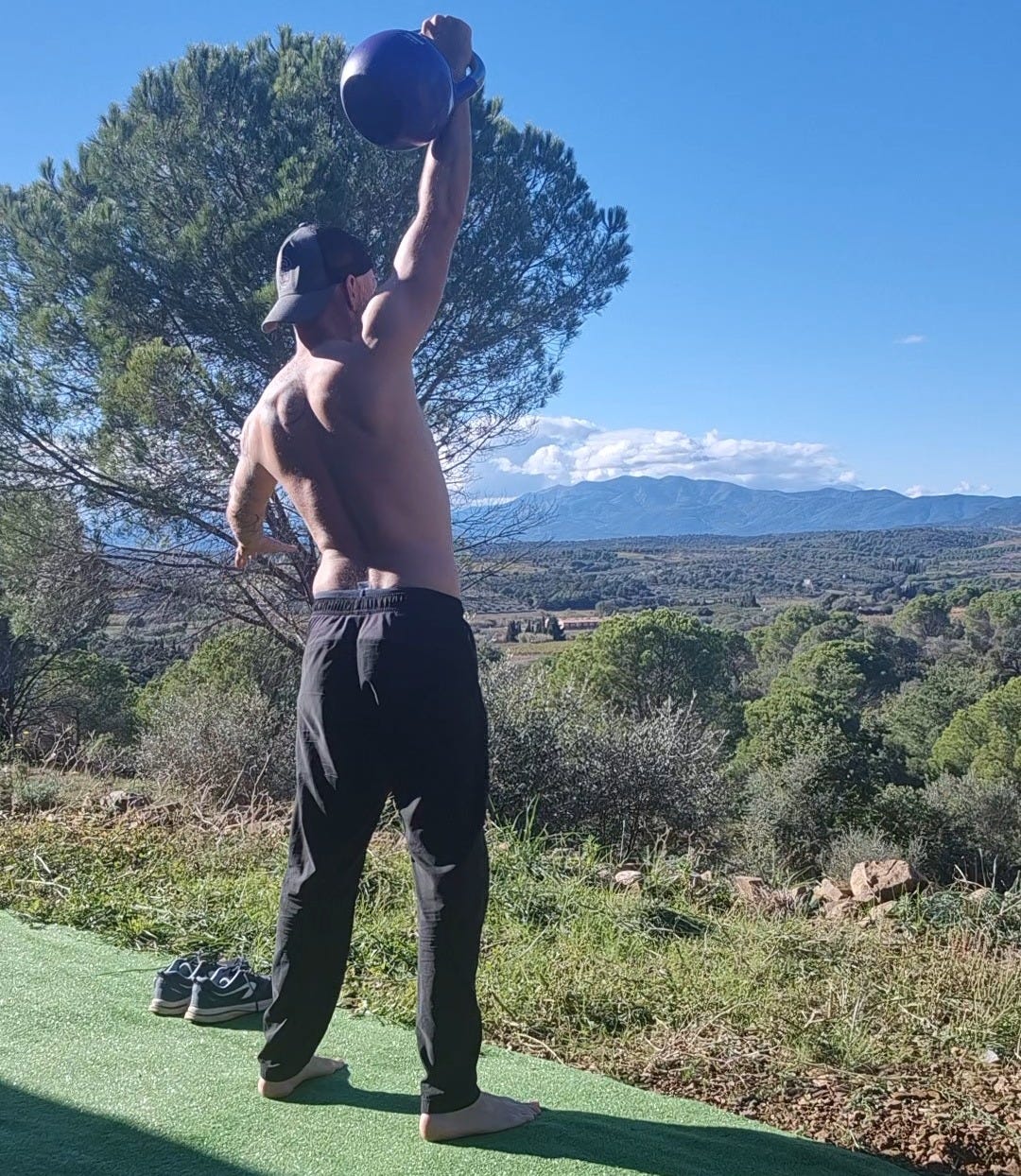
Your health is your capital in the wilderness.
Physical and mental well-being are your most valuable assets, essential for survival, performance, and enjoyment in a natural environment. It’s a practical truth that your capacity to thrive is directly dependent on your physical condition and ability to handle the demands of the wild. If you are hurt, you are useless. You are the one who needs to fix everything. Who would cook? Who would chop firewood? Your health is your capital.
The beauty of living minimalist in a tiny house off-grid is that it means freedom the trap of modern life, clutter, bills, and gyms—but it also demands resourcefulness for staying healthy and fit. The good news is that since, you are living outside already by definition you live healthier and have to move more. But we need to keep challenging our bodies, which is where we need to exercise deliberately.
No equipment? No problem. Nature and your daily routines become your gym, turning bodyweight exercises and chores into an effective fitness system that builds strength, endurance, and resilience. This approach keeps you healthy, free, and happy while aligning perfectly with a simple life.
Benefits of Living in Nature: A Double-edged Sword
Deciding to live remotely in an off-grid tiny house, by definition will make you live healthier. Since you live in nature, you automatically connect more with nature. Things are simply more manual and require more physical effort. Due to energy restriction lots of electrical appliances are replaced by manual activities (mix a dough by hand…).
Scientific research proved over and over again the health benefits of the outdoors related to various aspects:
Physical Health: Time spent outdoors can lower blood pressure, reduce stress hormone levels (cortisol), and improve immune function. Physical activity in natural settings, such as hiking or walking, can lead to more effective workouts and a greater sense of well-being compared to indoor exercise.
Mental Health: Exposure to nature is linked to reduced anxiety, improved mood, increased self-esteem, and enhanced cognitive function and creativity.
Resilience and Survival: In a wilderness context, good health provides the energy, stamina, and mental clarity needed to navigate challenges, make smart decisions, and manage stress effectively.
However, living in the wild makes some forms of exercise and practice more complicated. Gyms or machines are most likely not around or accessible that easily. We’ll need a little extra creativity to find ways to workout effectively and we may need a little extra help to stay motivated (more on this later in this article), too.
Use Your Own Body: Bodyweight Fitness For Minimalist Off-grid Living
Bodyweight training requires zero gear, fits any space, and scales with your progress—making it ideal for tiny house dwellers hauling water, chopping wood, or tending a garden. Compound movements like squats, push-ups, pull-ups, and planks engage multiple muscles, mimicking real-world demands while boosting metabolism and functional strength.
In nature, fresh air amplifies benefits: vitamin D from sunlight, grounding from bare earth, and mental clarity from outdoor sessions reduce stress hormones and improve recovery. Unlike gym routines, this integrates movement seamlessly, preventing the “all or nothing” trap. Consistency trumps intensity: short, daily sessions compound into a solid fitness level.
And we off-grid tiny house people are lucky: most of our daily chores are already exercise. Chopping firewood, installing solar panels, carrying water jugs… this is functional fitness in its purest form. A lot of these can be augmented with deliberate exercise. Instead of walking to carry groceries to the house, I could do lunges. Instead of driving to the market, I could take the bicycle. In the morning, while I wait for my coffee to brew I could to a couple of push-ups. These augmented “chore workouts” add 100-400 calories burned daily without extra time, adding more effectiveness to an already active lifestyle.
Below I summarize some of the top bodyweight exercises that we can do anytime anywhere.
Essential Bodyweight Exercises for Minimalists
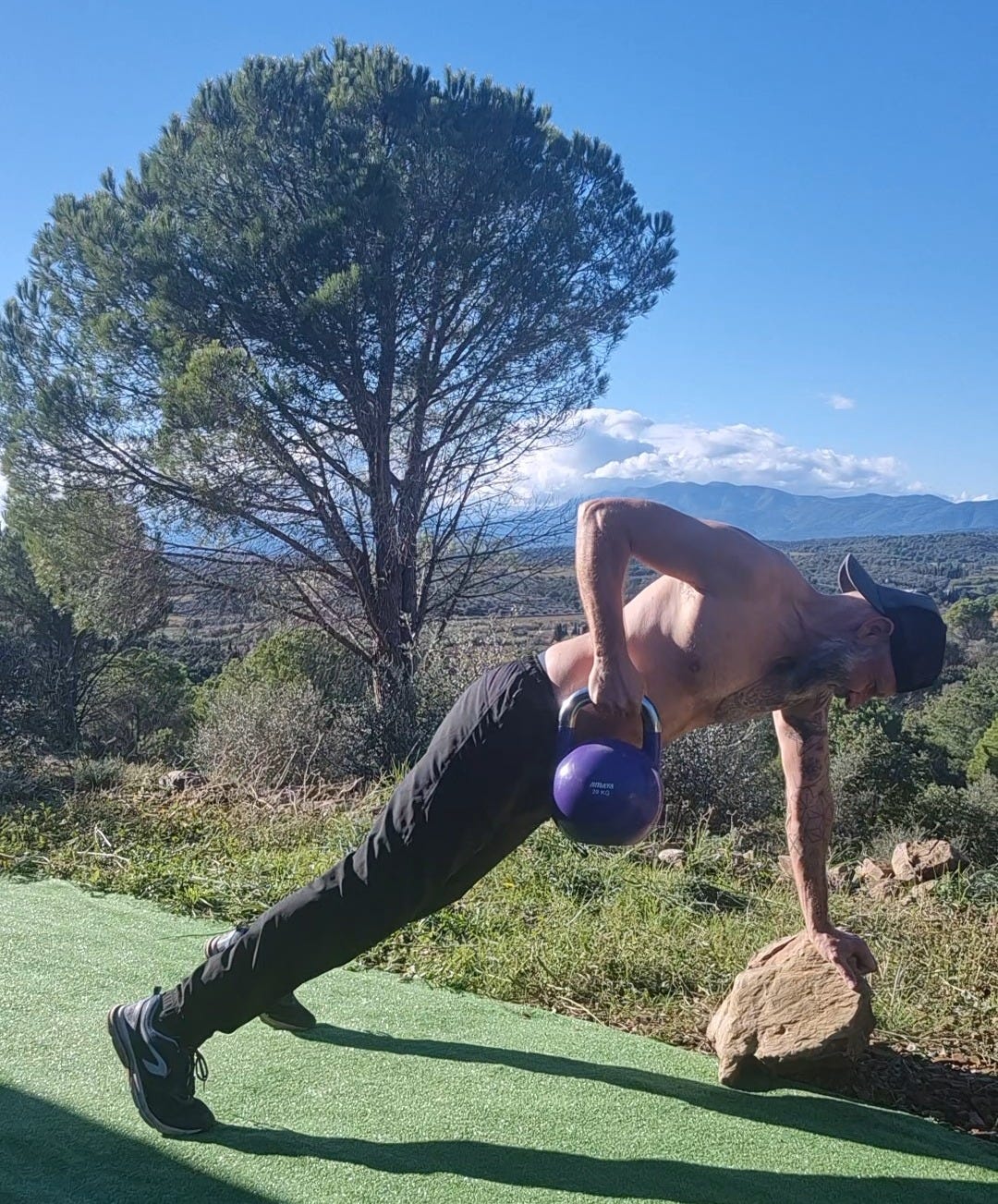
Focus on these proven moves, no gym needed. Depending on your fitness level, start with 3 rounds, 60 seconds rest between exercise, 3 times per week. Progressively overload by adding reps, rounds or weight, slowing tempo, reducing rest time, or adding instability by using uneven surfaces like rocks for elevation.
Bodyweight Squats
Trains legs, glutes and core.
Place your feet shoulder-width apart, lower until thighs are at least parallel to ground, drive up explosively. 15-20 reps.
Off-grid twist: Hold water jug for load.Push-Ups
Trains chest, shoulders, triceps.
Standard or knee push-ups. 10-15.
Wall push-ups for beginners. Legs elevated for advanced.Plank/Superman Superset
Trains core and back.
Alternate forearm plank (30-60 sec) with face-down Superman lifts (lift arms and legs up) (12 reps). Strengthens posture for hauling gear.Pull-Ups
Trains the back (specifically lats and traps).
Start with 3 clean, static, end-to-end pull-ups.
Can we done anywhere where you can hold on (branches, ladder…).
Beginner version: support your legs, or jump up to the top position and lower yourself down slowly and controlled.Burpees
Marvelous full-body cardio exercise.
Squat, plank, kickback, chest-to-ground, peel yourself up, jump up. (12-15 reps).
Spartan staple for endurance, and punishment if you miss an obstacle.Glute Bridges/Lunges Superset
Trains entire posterior chain.
Execute bridges (support your shoulders somewhere elevated), move your hips up and down (15 reps, add weight if too easy). Alternate with walking lunges (15 reps each leg). Bear Crawls
Full-body exercise, excellent for mobility.
Get down on hands and knees. Lift your knees and crawl forward 2x10 meters.
Better on uneven terrain, builds coordination and balance.
Bonus: Hill Sprints
Short-burst hill sprints are a powerful form of high‑intensity interval training to improve cardiovascular fitness quickly. Driving uphill against gravity strengthens glutes, hamstrings, calves, and hip flexors, and boost power.
If these get boring, two simple, effective, and cost-efficient additions will spice up your fitness in the wild routine: kettlebells and hangboards.
Kettlebells are steel weights shaped like a ball with an attached handle, designed for dynamic, full‑body strength and conditioning exercises that combine resistance and cardiovascular training. They are not expensive but very versatile. A range of different exercises can be done to train many different aspects.
A hangboard is a compact training device, usually mounted above a doorway or wall, with various edges and holds. It’s very popular among climbers used for hanging exercises to train fingers. But it can generally be used to improve hand, arm and upper‑body strength.
The Power of Challenges: Use Competitions to Build Discipline
Daily consistency is king, but nothing accelerates like a deadline.
Signing up for a specific competition transforms “should workout” into “must prepare”—providing structure, community, and measurable goals that in a rather relaxed environment (like living chilled in a forest) may sometimes lack. You have a concrete deadline looming; you told your friends; you spent money; you’ll definitely feel more pressure to workout.
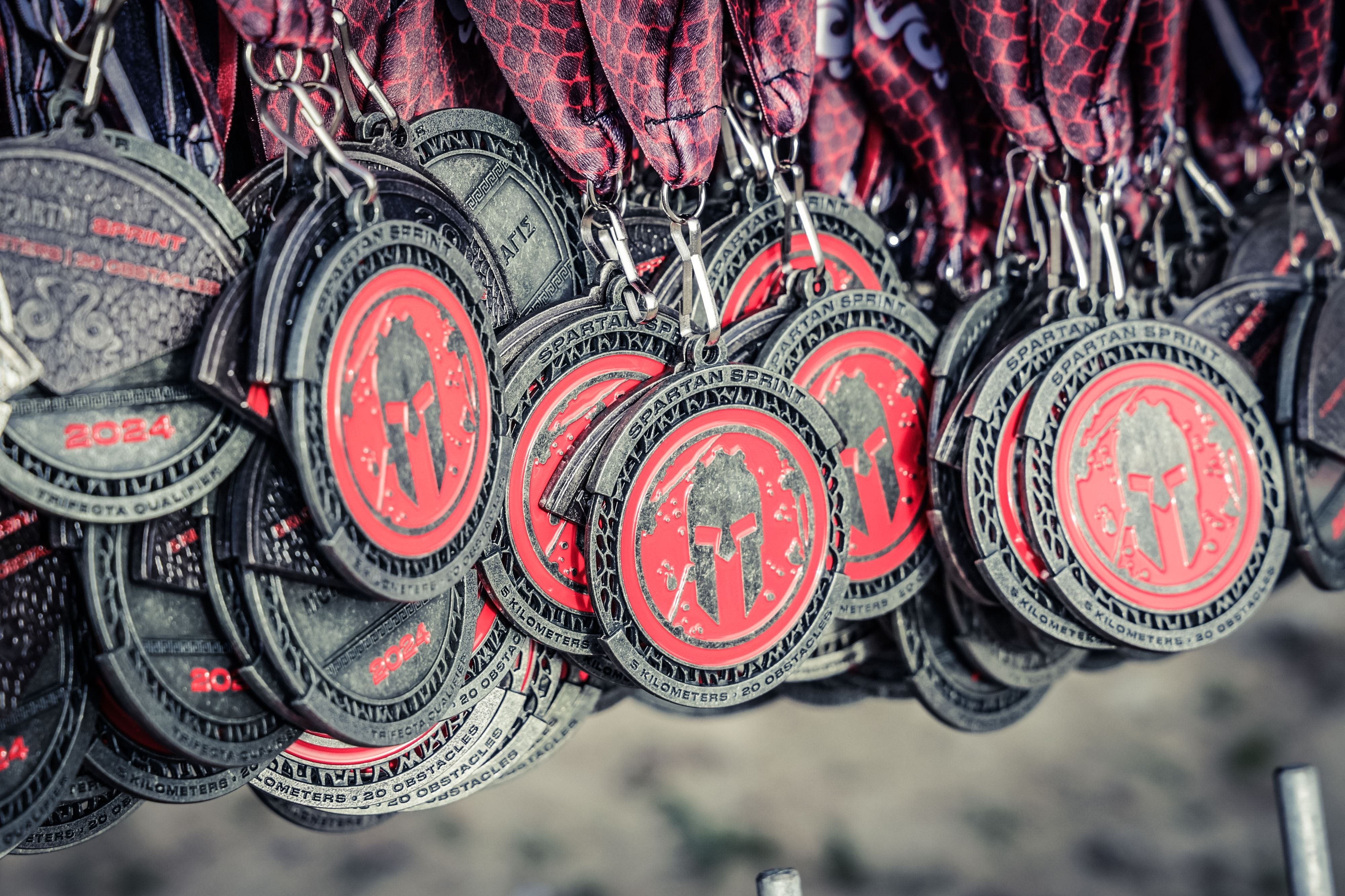
I use this technique a lot as it also gives me more direction rather than just random workouts. I know what I have to prepare for and I keep overloading progressively to provoke adaptations and improvements in my body. I completed numerous competitions—and my favorite are Spartan Races, which are obstacle course races (OCR). I am a nine-time Spartan Race finisher.
They offer a variety of race distances tailored to different fitness levels. The Sprint, the shortest distance, typically spans 5 to 7 kilometers and features 20-23 obstacles. The Super covers 10 to 12 km with 24-29 obstacles. The Beast presents the ultimate test with a 15 to 22 km course and 30-35 obstacles.
The mix of running, obstacles and tough terrain makes it a bit daunting but after completing will feel you with even more pride. Due to complexity of the format the right preparation is tricky—especially for beginners.
Introducing The Spartan Race Preparation Program
To increase changes of success, reduce risk of injury, improve preparation without the guess work, and simply to have more fun, I created the Spartan Race Preparation Program. I am a certified fitness and nutrition coach and built this program based on my experience of having completed many races.
It's a 12-week guided training program with several bodyweight workouts per week, nutrition guides, obstacle guides, and habit and mental toughness forming workbooks. It’s an app that includes lots of explainer videos. All for the price of less than a pizza.

Build Your Capital for the Wilderness
In a tiny house, living off-grid, health and fitness isn’t vanity; it’s vitality. We already live healthier “out here” anyway. But to improve our fitness levels (or even just to maintain) we need to exercise deliberately. In this post we talked through various simple bodyweight techniques that we can use anytime, anywhere. To help us stay on track, signing up for official competitions—like Spartan Races—will give us just this little extra discipline needed.
To find out more about how to ideally prepare for such a competition, in a guided way without the guessing, take a look at:
Strong body, free mind, happy life—built one squat, one carry, one deliberate step at a time.
If you found these tips valuable, subscribe to The Rich Minimalist for more minimalist exercise or nutrition wisdom for vibrant health and fitness.
Which top exercise would you add? Please leave comment below and let us know or just leave a ❤️.