

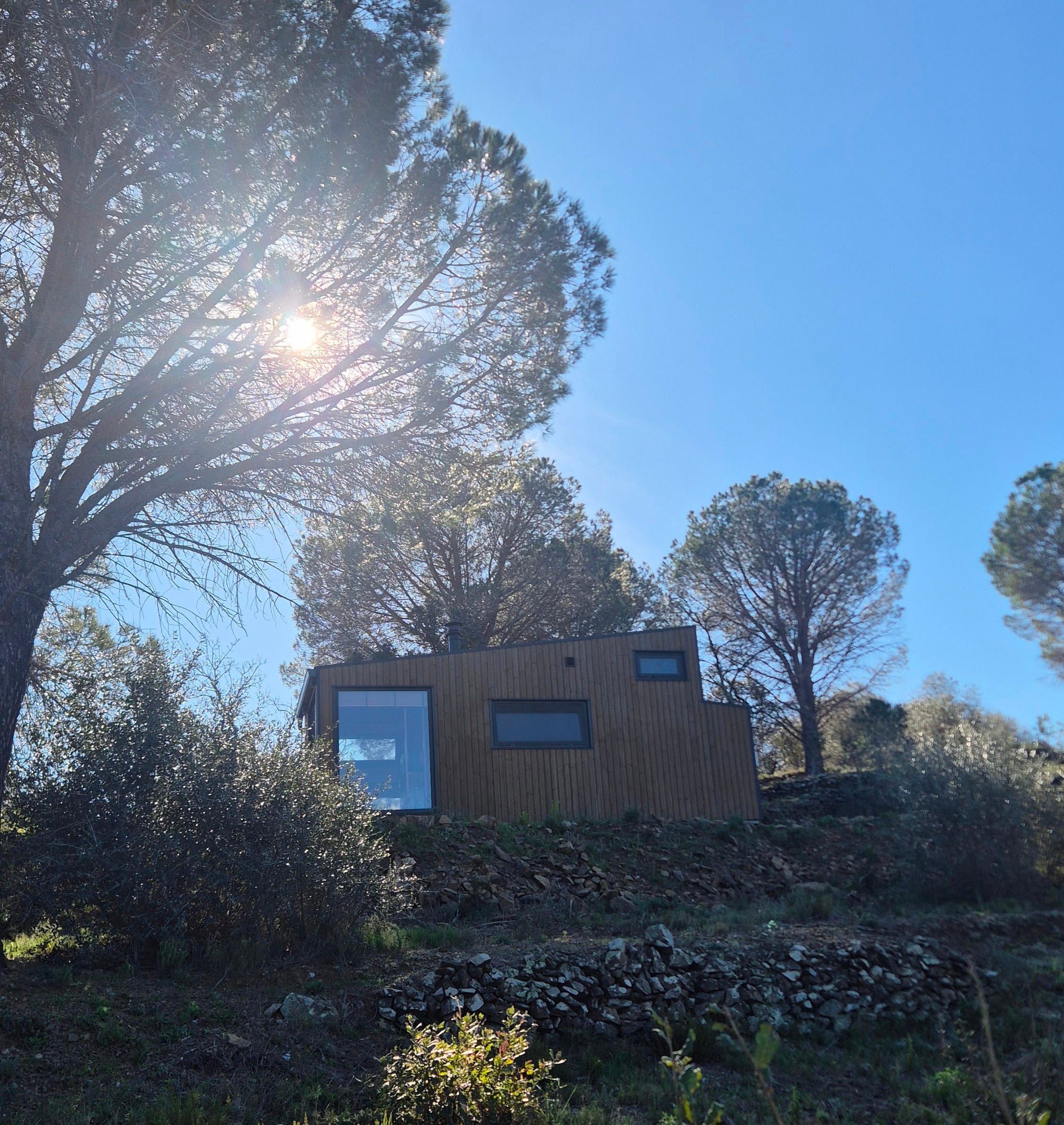
There’s a very specific kind of silence when you wake up in a tiny house secluded in nature. No traffic, no sirens, no upstairs neighbor dragging a chair at 6 a.m. The soundtrack is mostly birds, wind in the trees, and occasionally rain tapping on the roof—well sometimes a lot of rain, or even storms, scary!
That’s how my mornings start now: not with a brutal alarm clock on a phone, but with natural light and the rhythm of the place. It’s still early, but it’s a different kind of earl, one that feels chosen instead of imposed.
This morning routine didn’t appear overnight. It’s my answer to years of rushing into the day, scrolling emails before getting out of bed, and wolfing down breakfast while already stressed.
In the tiny house I want the opposite: a slow, deliberate start that supports health, creativity, and a minimalist, off-grid life. Every step in this routine has a purpose, even if on the surface it looks simple.
Waking up with light, not alarms
Most days I wake up when the light starts to enter the tiny house. The space is small, so the first rays of sun make a difference quickly. I don’t use an alarm clock if I can avoid it. Instead, I let my body sync with the natural rhythm around me. In practice that still means getting up fairly early, but without the aggressive “fight or flight” of a ringtone—also known as fucking ringtone.
I do this for a few reasons. First, it’s better for my nervous system. I don’t begin the day with a spike of stress. I ease into my day. Second, living off-grid means I’m more aware of daylight as a resource. Sunlight powers the solar system (I save energy), warms the house, and sets the tempo for outside tasks. Waking with the light keeps me aligned with that reality instead of forcing my day on top of it.
There’s also a psychological shift: when you wake naturally, you start the day feeling that time is yours, not the world’s. For someone chasing health and freedom, that feeling matters a lot.

The ritual of fresh, black coffee
Once I’m up, the first deliberate act is coffee. Nothing fancy, just good beans, ground fresh, brewed black, on the gas stove in my Italian moka. In a tiny house you feel every smell and sound more intensely, and the scent of coffee filling a small wooden space is one of the simple luxuries I never get tired of.
I drink it slowly, usually standing by the window or sitting where I can see the trees and mountains. Or in bed. There’s no rush to “get going” yet. This is a small daily ceremony: it marks the transition from sleep to wakefulness, from passive to intentional. I’m not checking the news, not opening my inbox. I’m just there, with a hot mug, watching the day arrive. Maybe I start thinking ahead what needs to be done this day.
Coffee, in this context, is less about caffeine and more about attention. It anchors me in the present moment and reminds me why I’m here: to live more simply, closer to nature, with fewer distractions.
A walk around the house and the land: inhaling nature and checking the systems
After that first coffee, I step outside for a small walk around the house, the shed, and the bit of land that belongs to this place. I call it my “control tour”, but it’s also my way of inhaling nature first thing.
On one level, it’s pure enjoyment. I breathe in the cold air, listen to the birds waking up, feel the ground under my shoes. I look at the mountains, the snow in the distance, the forest, the changing sky. It’s a mini-meditation without sitting on a cushion. Just a human being standing outside their home, acknowledging where they are.
On another level, it’s practical and essential for off-grid life. I check if the solar panels and especially the cabling look fine, if anything has fallen or shifted during the night. I look at the water system, pipes, and connections to see if there’s any visible damage from wind, frost, or animals. In the city you assume these things “just work”. In the wilderness, you learn quickly that prevention is much easier than repair. This walk is my daily audit: is everything okay with the critical infrastructure that keeps my tiny living lifestyle alive?
The combination of those two purposes—nature and maintenance—makes the ritual feel very grounded. I’m not just a guest here. I’m responsible for a small ecosystem of wood, metal, water, and wires.
A quick cold shower (sometimes)
Depending on the day and how I feel, I’ll sometimes take a quick cold shower. It’s great for recovery when my muscles feel sore and to activate all my bodily systems. Cold water in the mountains has a way of making you very awake, very quickly. Doing it cold also saves energy (no need to warm it up).
I do this mainly for recovery after heavy training days and for the mental reset. Cold exposure helps with circulation, muscle recovery, and a cascade of health benefits, but for me the biggest effect is psychological. Stepping into cold water first thing is a micro-decision that says: “I can do hard things on purpose.” It trains mental toughness and it sets a tone of agency for the rest of the day. If I can’t cope with this little inconvenience how would I be able to handle real hardship?
In a tiny house, you’re already close to the elements. A cold shower is like shaking hands with them. Briefly uncomfortable, yes, but afterward there’s this pleasant sense of having pressed a reset button on your mind. I have never regretted cold shower.
Breakfast: eggs from happy neighbors
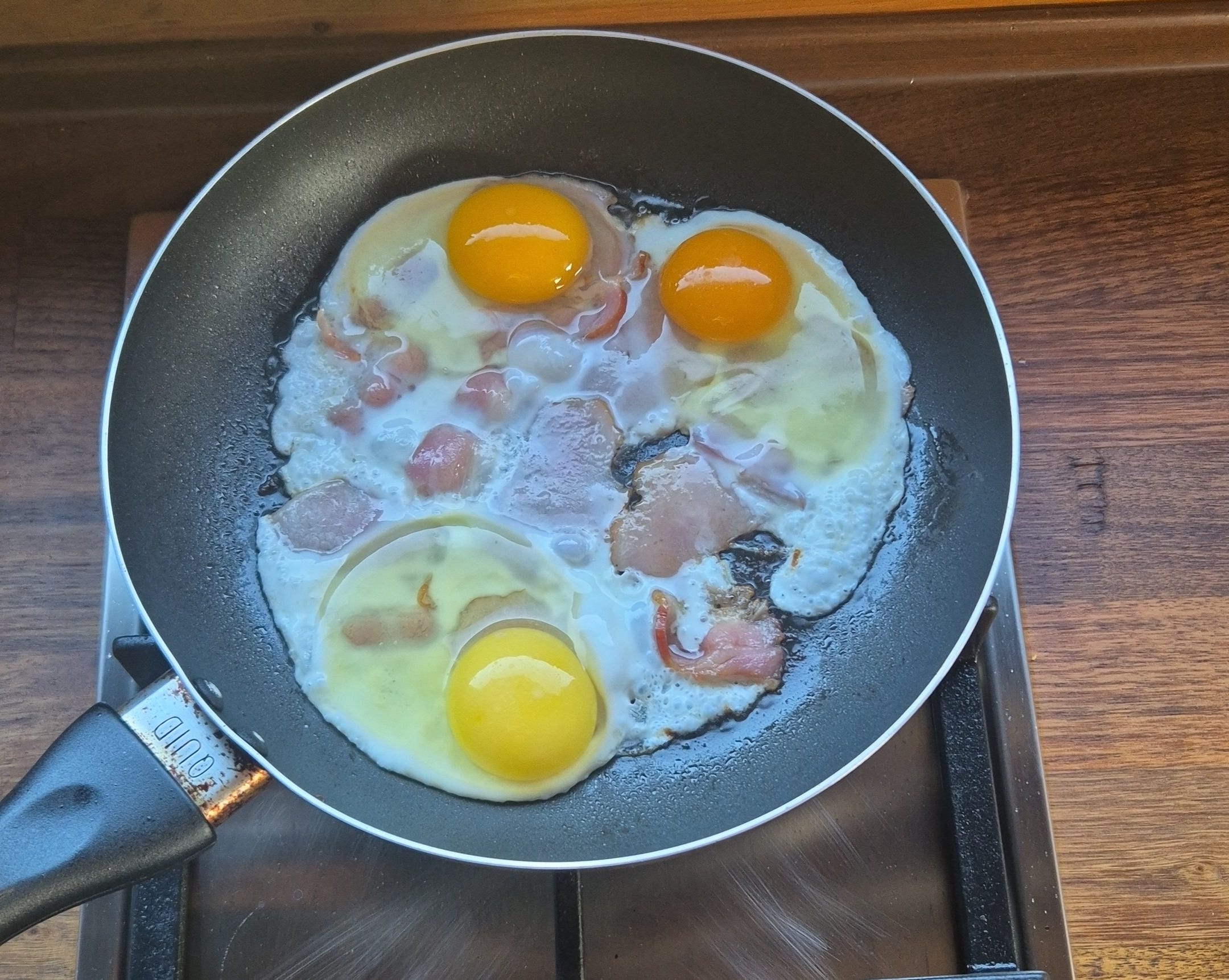
After moving and waking up my body, breakfast is simple but high quality. Often it’s eggs from my neighbor, who keeps happy, free-range chickens that live a much better life than anything you’d find in industrial farming. There’s something grounding about knowing exactly where your food came from, and in this case, it’s literally just on the other side of the hill.
I usually pair the eggs with something basic, maybe some bread, maybe some vegetables, maybe ham. The point is to fuel my body with real, local food. This is part of the minimalist philosophy too: fewer ingredients, better quality, less processing.
Transition to work and creative flow
Only after all that—waking, coffee, walk, maybe a cold shower, breakfast—do I sit down to work or dive into a creative project. By then, my body is awake, my head is clear, and I’ve already had some light movement and fresh air.
Work, for me, might mean writing for The Rich Minimalist, working on an app or program, preparing a podcast episode, planning future tiny house improvements, or doing my “regular” job remotely. Whatever it is, the morning routine builds a calm runway into it. I’m not arriving at the laptop already stressed, hungry, and overstimulated. I’m arriving ready.
The tiny house itself helps with this. The space is small and intentionally set up: there isn’t a lot of visual noise. No clutter, and I know where everything is. The desk or table becomes a focused zone. Outside the window, there’s nature. Inside, there’s just enough. This combination of physical minimalism and a steady morning structure makes deep work much more likely.
Why this routine matters so much to me
On paper, my routine is nothing revolutionary. Wake with light, drink black coffee, walk outside, sometimes take a cold shower, eat good eggs, then work. But the power is in how it feels, and in what it replaces.
It replaces waking up with a jolt to an alarm and immediately checking messages. It replaces rushing through a shower, grabbing whatever (junk) food is available, and sitting in traffic. It replaces starting the day already behind, and then constantly trying to catch up.
Instead, this routine does a few important things:
It respects my nervous system: starting slowly lowers anxiety and gives me more emotional bandwidth for the rest of the day.
It connects me to the place I live: the land, the weather, the systems that keep the tiny house running. I’m not disconnected from the basics of life. And I built all this, so it also makes me feel proud and good already in the morning.
It reinforces my values: health, freedom, minimalism, and nature are not just ideas I write about—they’re baked into my morning actions.
It protects my attention: by delaying screens and reducing external demands and stimuli, I keep a clear head for creative work and big decisions. I am definitely more productive here in the wild.
In short, my tiny house morning routine is a daily practice in living the life I say I want: slower, more intentional, more connected to reality and less dominated by noise.
If you’re reading this from a city apartment or a busy house, you don’t need mountains and a tiny house to take something from this. You can still experiment: wake once a week without an alarm, drink your coffee without your phone—and especially with all the sugary crap you get in most coffee shops, take a short walk outside your building and just notice what’s around you, choose one simple, real breakfast. See how your mind feels when you give yourself twenty minutes of quiet before handing your attention to the world.
And if you ever make it out to a tiny house in the wilderness—maybe even one with Viking runes and a view of the Pyrenees—you’ll already have the first pieces of your own slow, minimalist morning routine ready to plug into that life.
If you enjoyed this kind of mindset shift musings and you want more pieces that challenge the default settings of time, money, stuff, and freedom, consider subscribing to The Rich Minimalist. I’ll keep sharing practical, philosophy-backed ideas to help you build a life that’s lighter, healthier, and truly yours.
Or just leave a comment or a ❤️